


This article was created by a student taking part in the English Wizards internship programme. The author’s perspective is preserved; English Wizards provides editorial review, fact-risk corrections and presentation.
Start with the kind of gift you want
Shopping for Polish snacks and souvenirs is more enjoyable when you decide what the gift needs to do. A box of sweets is easy to share. A regional food product can carry a sense of place. Pottery, amber or woodwork lasts longer, but deserves a closer look at quality, origin and transport.
You do not need to spend heavily to take home something connected to everyday Polish life. Markets, supermarkets and specialist shops each solve a different problem. The useful question is not simply “Where are the souvenirs?” but “Who normally buys this, where was it made, and will it travel well?”
For packaged Polish snacks: use ordinary supermarkets
Everyday supermarkets are usually the simplest place to compare packaged sweets and savoury snacks. Large chains and neighbourhood stores commonly stock familiar products such as Ptasie Mleczko chocolate-covered foam sweets, Prince Polo or Grześki wafers, Toruń gingerbread and krówki fudge. Selection varies by branch and season, so browse first rather than treating one list as a guarantee.
Supermarkets are useful because prices are visible, packaging is sealed and expiry dates are easy to check. That makes them a practical choice for gifts that need to survive a train journey or a flight. If you are buying for somebody else, check allergens and choose packaging that explains the product clearly.

Fresh bakery items can be a better treat for the same day. Pączki, drożdżówki and regional pastries will not keep like boxed sweets, but buying them from a local bakery turns shopping into part of the experience rather than a last-minute airport task.
For regional food: visit an established market
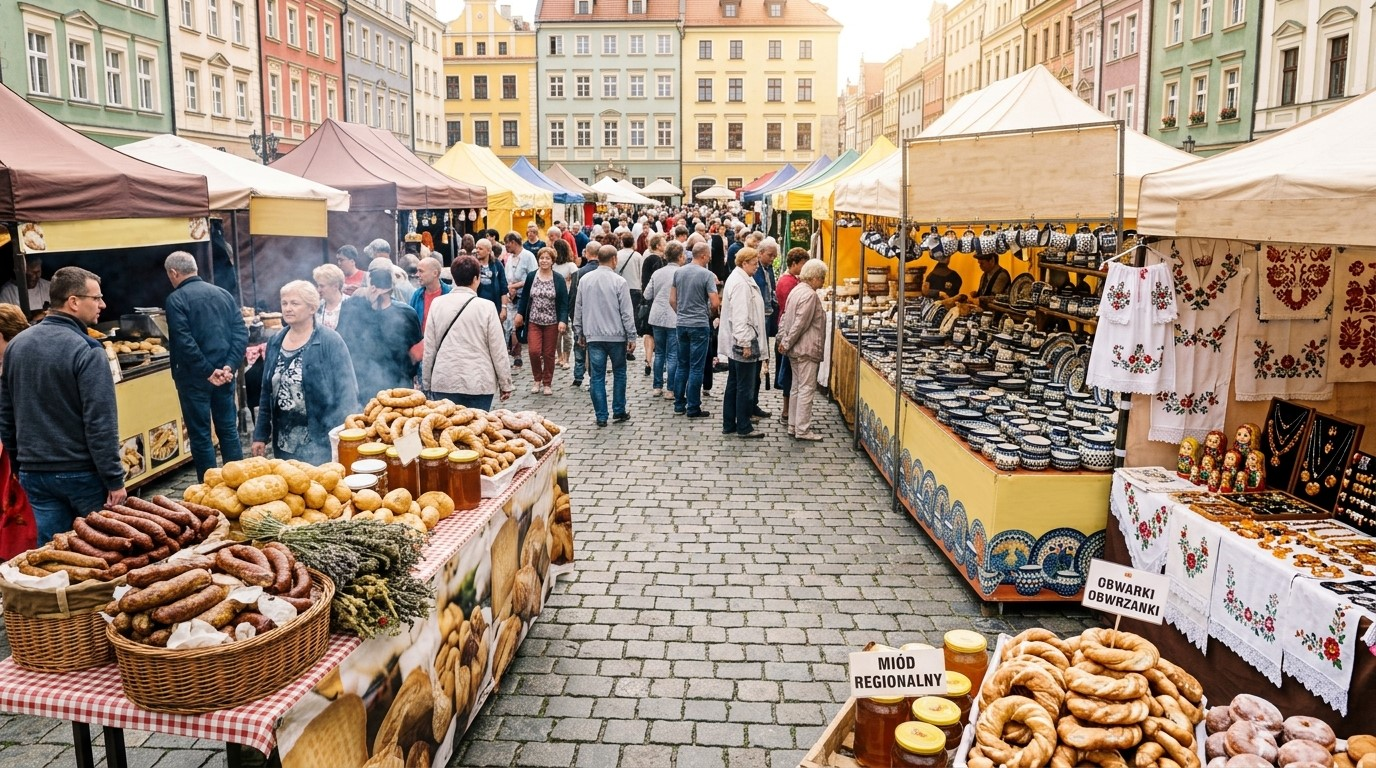
Markets give you the chance to compare fresh produce, bread, cheese, preserves, honey and cured meat in one place. In Kraków, Stary Kleparz describes itself as the city’s oldest continuously operating market and lists Polish cheeses, bread, confectionery, meat products and local goods among its offer. It is a useful starting point, although individual stalls and stock change.
You may find smoked cheeses, kabanosy, pickled vegetables, sauerkraut, mushrooms and jars of preserves. Ask the seller where a product comes from and how it should be stored. A fresh cheese that is perfect for lunch may be a poor choice for a long journey; a sealed jar or dry snack may be much easier to carry.
Oscypek is tied specifically to the Tatra region and has protected geographical status in the European Union. If regional origin matters to you, ask what you are buying rather than assuming every small smoked cheese is the same product.

For a lasting souvenir: look for specialist craft shops
Bolesławiec stoneware is one of Poland’s most recognisable craft traditions. Blue-and-white patterns are common, but makers also use many colours and motifs. Specialist pottery shops let you inspect the finish, compare patterns and ask who produced a piece. Check the maker’s care instructions before putting any item in an oven, microwave or dishwasher; do not assume every decorative object has the same specification.

Other possibilities include carved wooden boxes, chess sets, paper cut-outs, embroidered textiles and seasonal decorations. “Traditional” is not a precise origin label, so ask whether the item is handmade, where it was produced and whether the shop can identify the maker. Those questions help separate a meaningful local purchase from a generic imported trinket.
For amber: buy the story and the evidence
Gdańsk has a deep connection with Baltic amber, and the city’s Amber Museum presents both natural resin and finished objects. Amber jewellery is also sold in Kraków and other Polish cities. Colour alone does not establish authenticity: amber can appear in several shades and treatments can change its appearance.
For a higher-value piece, choose an established retailer, ask for written information about the material and treatment, and keep an itemised receipt. A vague “certificate” or a tourist location is not proof by itself. If you want context before buying, a museum or reputable craft gallery can help you understand what you are looking at.

Drinks, honey and gifts that need extra planning
Specialist food and drink shops may carry Polish mead, fruit or herbal nalewki, bison-grass vodka, regional beer, forest honey and herbal tea. These can make distinctive gifts, but taste and provenance matter more than grand health claims. Honey is food, not a guaranteed remedy, and descriptions such as “traditional” do not tell you who produced it.
If you are taking alcohol, fresh food, meat, dairy or plant products across a border, check the rules for your destination and carrier before buying. Allowances and restrictions depend on the route, age of the traveller and what is being transported. Pack liquids and fragile jars for the luggage rules that actually apply to your trip.
A simple shopping route
- Buy edible gifts first on your list, not first in your day. Choose sealed products near the end of the trip and check dates.
- Browse before committing. Compare market stalls and specialist shops, especially for crafts and amber.
- Ask about origin and care. Find out who made the item, where it came from and how it should be stored or used.
- Keep the evidence. Save receipts and written product information for valuable purchases.
- Check the journey home. Confirm customs, food, alcohol and baggage rules before packing.
The best Polish souvenir does not have to be expensive. It should be something you understand, can transport safely and will be pleased to share or use after the trip. A supermarket sweet, a market preserve and a carefully chosen craft can each tell a different part of the story.
