


This article was created by a student taking part in the English Wizards internship programme. The author’s perspective is preserved; English Wizards provides editorial review, fact-risk corrections and presentation.
If you’re preparing to start a new life abroad, you know very well it can sometimes become both a thrilling and nerve-wracking experience. Something that could immensely help when adjusting to a new culture is through its cuisine. Poland possesses not only interesting history but also a rich culinary heritage – and offers a feast for the palate that every expat (and traveler!) should try. We want all of our Wizards to enjoy the best of what Poland has to offer, so let me show you this culinary adventure, which will not only allow you to dive into some traditional dishes that you absolutely must try during your time in Poland, but also will help you to get a better understanding of beautiful Polish culture.
Pierogi Ruskie
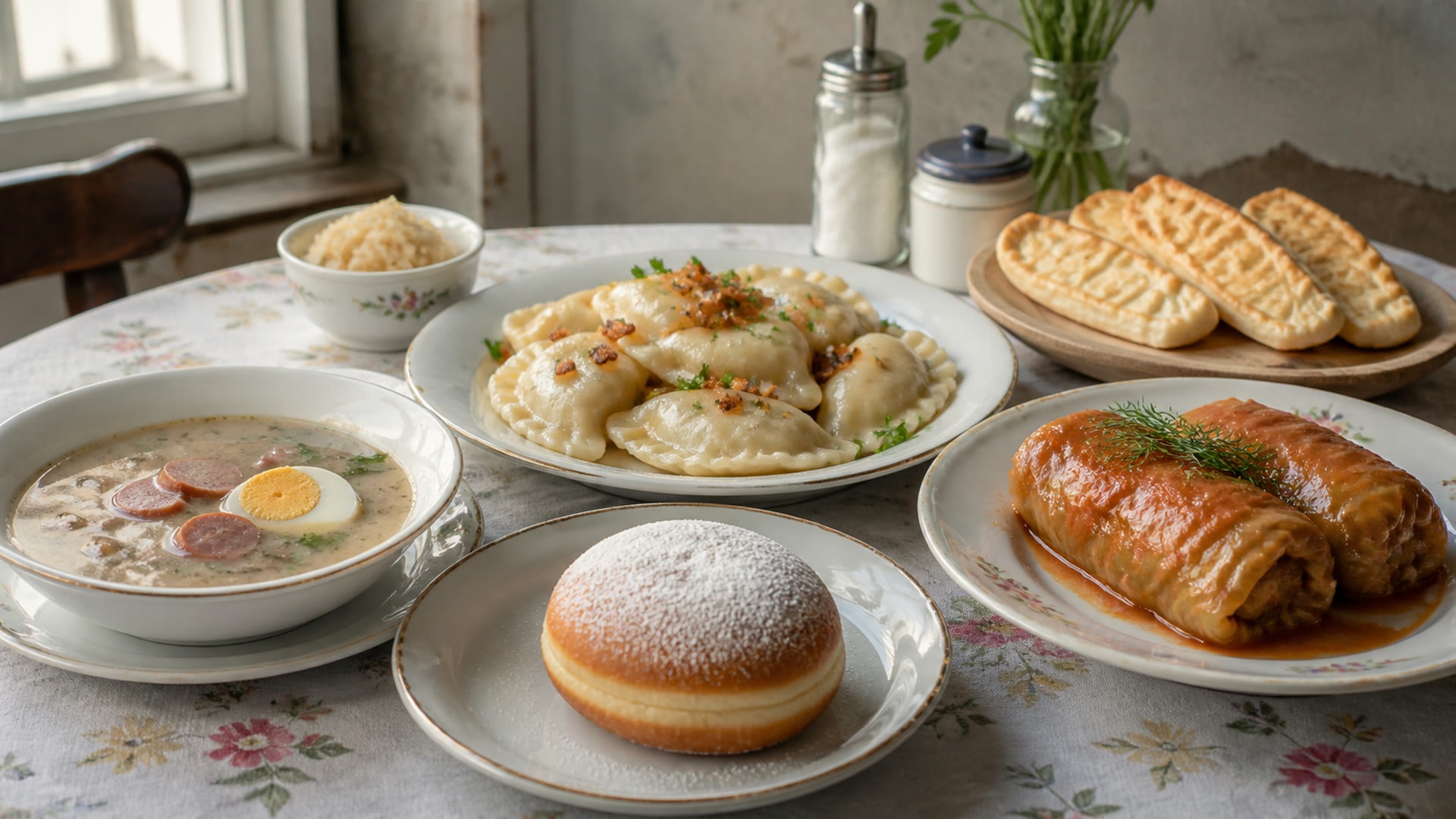
Pierogi ruskie are a much-loved Polish comfort food filled with potato and twaróg cheese. Filled with a mixture of potatoes and cheese, they are typically boiled and then sautéed with onions and bacon. They provide a really nice, hearty meal, and you can find them in every traditional Polish restaurant, widely available at traditional restaurants and milk bars. Poland even offers restaurants entirely dedicated to serving different types of dumplings! Throughout the Poland, you can try various versions of these beloved dumplings – offered with sour cream, filled with mushrooms, sauerkraut, meat, or even sweet fillings like blueberries and strawberries (this sweet version is typical only for Poland!). “Pierogi” are an excellent way to get acquainted with Polish cuisine, and each region has their own version of serving them, therefore also offering a piece of regional history and Poland’s diversity.

Oscypek (Smoked Cheese from Zakopane)
Hailing from the Tatra Mountains, oscypek is a unique smoked cheese made from sheep’s milk. It has a very distinctive, slightly salty flavor and is often grilled, usually served with cranberry sauce. The process of making oscypek is an art passed down through generations, involving smoking the cheese over a fire of pine wood for several days, which gives it that characteristic smoky taste. While you can find oscypek at various markets and food stalls in Kraków (especially during festive seasons), the best oscypki are always found in Zakopane (it’s a little less than a 2-hour drive from Kraków, and you won’t regret it!). You can try it either from local shepherds who produce oscypki themselves in a traditional way (and probably has been doing it for generations), or you may buy them in cheese shops in Zakopane’s bustling town center, where the aroma of smoked cheese fills the air. This specific type of cheese provides a valuable insight into cuisine differences in Poland and makes a delightful snack that all Polish people deeply enjoy. It’s particularly popular during winter, offering a warm, hearty snack. Pairing it with the sweet tartness of cranberry sauce creates a perfect balance of flavors that captures the essence of the Polish mountains.
Stuffed Cabbage (Gołąbki)
Gołąbki (literally “little pigeons”) are cabbage leaves stuffed with a mixture of rice, minced meat, and onions, then baked in a tasty tomato sauce. This delicious dish is a classic comfort food in Poland and is often served in family-style restaurants. You can find them in many traditional Polish restaurants, and some of these places offer vegetarian versions with mushrooms or lentils, catering to different dietary preferences. The blend of tender cabbage, richly basked in rich sauce, makes this dish a satisfying meal that perfectly shows the home-cooked warmth of Polish cuisine – and it’s really filling!
Gołąbki are particularly popular in autumn and winter when people crave warming, substantial meals. Nowadays, they’re often served with mashed potatoes or a slice of fresh bread to soak up the delicious tomato sauce. The dish’s simplicity and heartiness make it a staple in Polish households, perfectly showing the spirit of Polish hospitality.
Pork Chop with Potatoes and Salad (Kotlet Schabowy)
This is the quintessential Polish meal! “Schabowy” is a breaded pork chop served with mashed potatoes and a side of fresh salad (usually a mix of cabbage or grated carrot). This dish is a staple in Polish households and restaurants alike. It’s similar to the German schnitzel, but with a distinct Polish twist, showcasing the country’s love for pork. You can enjoy schabowy at many traditional restaurants and milk bars across Poland. What makes something as seemingly ordinary as pork chop such a delicious dining experience is undoubtedly crispy breading of the chop, paired with light, creamy potatoes and cold refreshing salad. Together, they create a really balanced dish beloved by all Poles. “Schabowy” is often enjoyed during Sunday family dinners, reflecting the importance of gathering around the table to share a hearty meal. It’s also commonly found in Polish milk bars (“bar mleczny”), which are affordable and serve traditional home-cooked meals. The dish’s popularity speaks to its ability to bring great comfort, making it a must-try for anyone exploring Polish cuisine.
Chicken Soup (Rosół)
Often referred to as the “Polish penicillin”, rosół is a clear chicken broth served with noodles, carrots, and sometimes parsley. It’s a widely popular dish, usually associated with Sunday dinners, and is considered a comforting remedy for colds (and, according to Polish people, many other ailments). The broth is simmered slowly to extract flavors from the chicken bones, creating a rich, nourishing soup that warms the soul! This simple yet nourishing soup is a perfect starter to any meal, always offering a taste of home and giving a sense of comfort. Rosół is also often served with homemade noodles (known as “kluseczki”), which add a delightful texture to the soup. It’s also a traditional dish at Polish weddings, where it symbolizes health and prosperity for the newlyweds. The soup’s popularity stems from its ability to soothe both body and mind, making it a beloved dish in Polish culture.
Polish Doughnuts (Pączki)
“Pączki” are deep-fried doughnuts filled with jam, custard, or other sweet fillings, and usually topped with powdered sugar. These treats are especially popular on Fat Thursday (“Tłusty Czwartek”), which Polish people greatly enjoy and widely celebrate. On this day, bakeries are filled with queues of people eager to buy these delicious pastries, as tradition dictates that eating them will bring good luck and prosperity. You can find “pączki” year-round in bakeries across all cities in Poland. Their fluffy texture and sweet fillings make them an irresistible dessert (although Poles mostly consider it to be a snack), reflecting the sweet side of Polish culinary culture – and they are so much different than the donuts we can usually get abroad! “Pączki” are made with a rich, yeasty dough that is deep-fried to perfection, resulting in a golden, crispy exterior and a soft, airy interior. Fillings range from traditional rose jam to more contemporary flavors like chocolate or custard. The combination of flavors and textures makes pączki a beloved treat for people of all ages!
Polish Red Borscht (Barszcz Czerwony)
Polish red borscht is a vibrant beet soup that is an essential part of Polish cuisine. It’s known for its
deep red color and slightly sour, amazingly intense taste, achieved through the fermentation of beets. Borscht is a dish that brings people together, whether it’s served at festive gatherings or enjoyed as a comforting meal on a cold day. It is usually served with a side of delicious small dumplings, filled with either mushrooms or meat (in Poland, they’re called “uszka”). It’s a very important, traditional dish, served on every Polish table during Christmas Eve – although it can be found year-round in most traditional Polish restaurants. Again, you can try borscht at places like milks bars, here the focus is on traditional recipes and authentic flavors. The soup’s distinctive flavor and rich color make it a memorable experience and a true staple of Polish culinary tradition. Borscht is more than just a soup; it’s a symbol of Polish heritage, reflecting the country’s agricultural roots and love for both hearty and nourishing food.
Babka (Polish Cake)
“Babka” is a traditional Polish cake known for its soft, airy texture and subtle sweetness. It’s often made with yeast, giving it a slightly bread-like quality, and is typically flavored with vanilla or citrus zest. Sometimes it’s also swirled with chocolate or filled with raisins, “babka” is a popular treat during Easter but is enjoyed throughout the year. Its delightful flavor and beautiful presentation make it a beloved dessert that captures the essence of Polish baking. “Babka” is often served with a cup of tea or coffee, making it a perfect afternoon treat. Its light, airy texture and subtle sweetness make it a versatile cake that’s enjoyed by people of all ages. The cake’s popularity speaks to the Polish love for simple, yet delicious baked goods, and its presence at family gatherings and celebrations underscores its cultural significance.
Regional Specialities
We cannot, of course, forget about specialties throughout the country. Each region of Poland boasts its own unique traditional dishes that reflect the local culture and history. These regional specialties offer a deeper understanding of Polish culinary traditions and the diversity of flavors across the country. “Obwarzanki” are a popular snack for locals and tourists alike, providing a quick and tasty bite on the go. Toruń is famous for its gingerbread cookies that are both spicy and sweet, always sold in big sixes and beautifully decorated. Known as “pierniki”, these gingerbreads have been a tradition in Toruń for centuries, with recipes passed down through generations. While visiting this town, you can even try your hand in making your own! In Poznań, the “rogal świętomarciński” (St. Martin’s croissant) is a must-try; this crescent-shaped pastry filled with white poppy seeds and nuts is a local specialty enjoyed on St. Martin’s Day. It’s awfully sweet and delicious and can even make up for a whole meal. The pastries are so cherished that they have protected designation of origin status, ensuring that only those made in the traditional way can be called rogale świętomarcińskie. Meanwhile, the Śląsk region offers “rolada” (beef roll) and “kluski śląskie” (Silesian dumplings). “Rolada” is a dish made from thin slices of beef rolled with bacon, onion, and pickles, then slow- cooked until tender. “Kluski śląskie” are round potato dumplings with a characteristic indentation in the center, often served with rich gravy. This combination makes for a hearty meal and a typical
Sunday dinner in this region. It’s a testament to the region’s culinary traditions, emphasizing the use of local ingredients and time-honored cooking methods. These are, of course, just a few of the many traditional, regional dishes – Poland has a large number of them, and each of them demonstrates the diverse and rich tapestry of Polish culinary traditions, showing us that every corner of Poland offers something unique to discover. Exploring all these dishes is not just about satisfying your hunger, but about engaging with the cultural and cuisine landscape of Poland. So, next time you’re in Poland, make sure to treat yourself to these culinary delights and immerse yourself in the rich flavors of Poland.
