


This article was created by a student taking part in the English Wizards internship programme. The author’s perspective is preserved; English Wizards provides editorial review, fact-risk corrections and presentation.
Introduction
Polish winter has a way of exposing tourists. The first snow hits, temperatures drop below zero, and suddenly the person in a stylish trench coat and sneakers is shivering at a tram stop, wondering why their toes went numb. Locals just zip up, step over the snow slushie, and get on with their day. The secret is not heroic resistance to the cold. It is preparation. In Poland, winter is something you work around rather than fight. You learn which clothes actually keep you warm, how to move safely over icy pavements, when public transport is your friend, and why a hot bowl of soup can feel like a survival strategy. If you want to experience Poland from November through March without spending every day dreaming about spring, take a few lessons from the people who live here.
Dressing and Walking in a Polish Winter
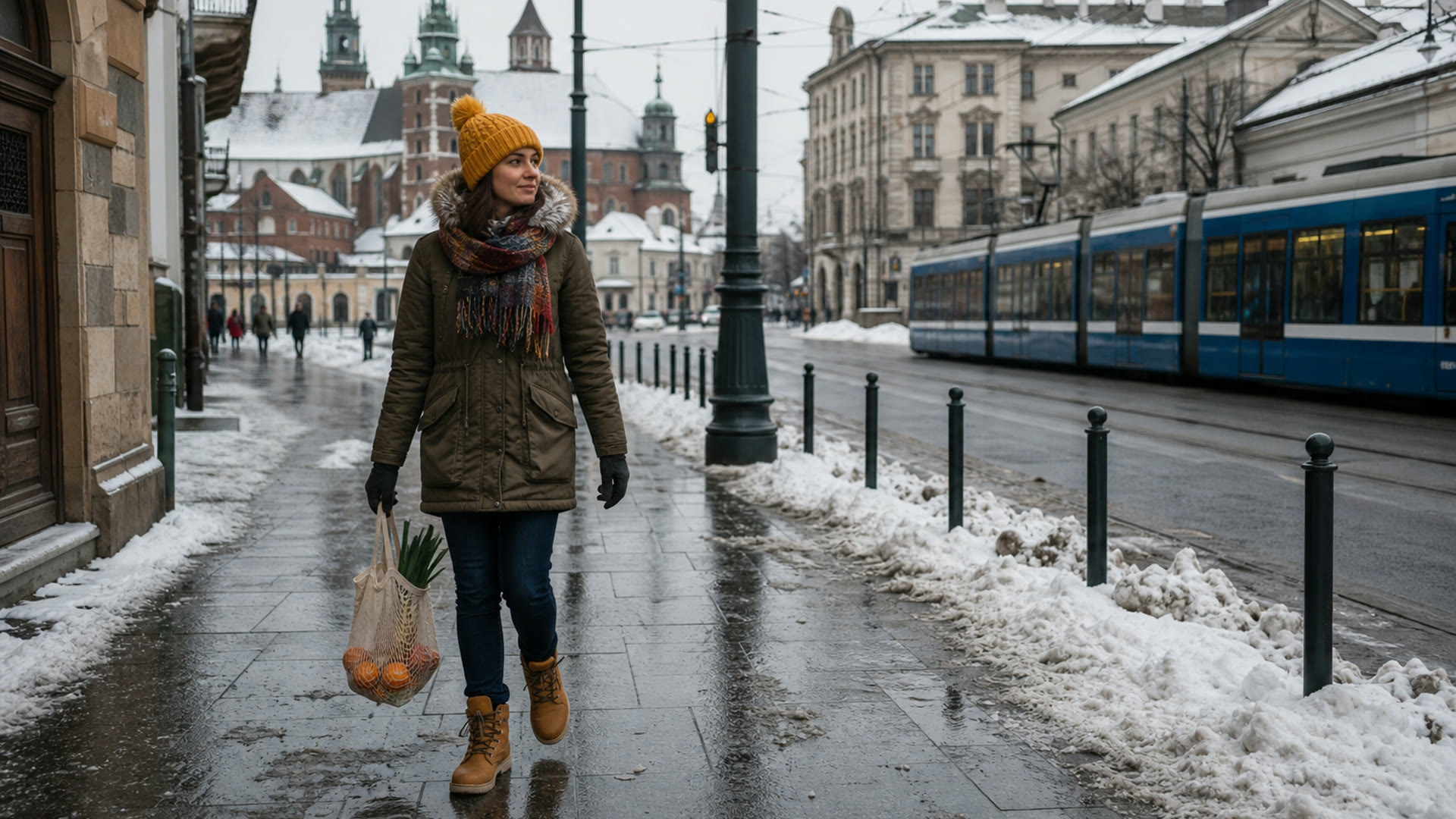
The biggest mistake visitors make is treating winter clothing as a fashion choice. In Poland, it is equipment. Start with layers. A warm base layer keeps heat close to your body, while a sweater or fleece provides insulation. Your outer layer should block wind and moisture. You do not need an enormous expedition jacket, but a good winter coat that reaches the hips makes a noticeable difference when you are waiting outside. Your feet deserve special attention. Polish winter often means a mixture of snow, slush, rain, and salt. Waterproof boots with good traction are far more useful than fashionable trainers. Thick socks help too, but avoid squeezing several pairs into a boot that is already tight. Then there are the small things locals rarely leave home without: gloves, a hat, and a scarf. A surprising amount of comfort comes from covering your head and neck properly. A good rule is simple: if you are comfortable for the first ten minutes outside, you are probably dressed correctly. Once you have the right clothes, the next challenge is getting around. Polish cities work hard to clear major pavements and roads, but winter walking can still involve frozen patches, slippery cobblestones, melting snow, and the infamous combination of ice underneath a thin layer of slush. Walk deliberately. Shorter steps give you more control than the long, confident strides you might use in summer. Good footwear makes a dramatic difference, but you can take it further. If you are staying for several weeks and expect genuinely icy conditions, inexpensive traction attachments (raczki) for your boots can be worthwhile. They may look slightly excessive until everyone around you starts walking like penguins. Public transport is another local survival skill. In cities such as Warsaw, Kraków, Wrocław, and Gdańsk, trams, buses, and trains can save you from a long, freezing walk. Download a local transport app (e.g. Jakdojade) – understand how ticket validation works and give yourself extra time when conditions are bad.
Daily Routines and Winter Comfort Food
Surviving Polish winter is not only about what happens outside. Your indoor routine matters just as much. Polish homes are generally heated through the winter, and radiators can become your best friends. But that does not mean every room will feel tropical. Older buildings can have chilly floors, drafty windows, or rooms that warm up slower than others. Instead of turning the heating up to maximum and walking around in a T-shirt, locals often make winter comfortable through small adjustments: warm socks, slippers (kapcie), blankets, and sensible layers indoors. If you are renting an apartment, learn how the heating works early. Some buildings use central heating with individual radiator controls and others have different systems entirely. Ventilation can also feel counterintuitive when it is freezing outside. Opening a window for a few minutes may feel ridiculous when the temperature is below zero, but airing out a room briefly is common and can make an apartment feel fresher without keeping the window open for hours. Then comes the psychological side of winter. Darkness arrives early, particularly in December and January. Instead of treating every dark evening as a reason to stay miserable indoors, build small rituals around it. Make tea. Cook something warm. Read. Go to a café. Visit a museum. Meet friends for dinner. The goal is not to pretend winter is summer but to make it enjoyable in itself. Polish winter becomes much easier when you stop treating food as fuel and start treating it as part of the season. This is the time for żurek (sour rye soup), barszcz (beetroot soup), rosół (chicken broth), and other warm, filling dishes. A steaming bowl of soup after an hour outside can accomplish what another layer of clothing cannot. There is also something distinctly Polish about stopping for a hot drink after being outside. Coffee, tea, and increasingly elaborate café drinks have become part of urban winter life. In December, seasonal flavours, grzane wino (mulled wine), and festive cafés can turn a dark afternoon into something pleasant. If you are invited to someone’s home in winter, accept the invitation if you can. Polish hospitality is particularly valuable when the weather is miserable. A warm apartment, homemade food, and conversation with friends can make a freezing evening feel almost luxurious.
Understand the Polish Winter Mindset
Poles generally do not wait for perfect weather before living their lives. Children still go to school. People still commute. Shops stay open. Friends meet for dinner. People walk their dogs. Families visit Christmas markets. Runners continue running, often wearing considerably less clothing than you would expect (You can even spot some cyclists, but that’s a bit extreme).
This does not mean everyone loves the cold. Quite the opposite. You will hear plenty of complaints about the weather. But complaining about winter and functioning during winter are perfectly compatible. That mindset is useful for newcomers. If you spend four months checking the forecast and cancelling every plan because it is cold, winter will feel endless. If you accept that cold weather is simply part of the environment, it becomes much easier to adapt. There is also a social rhythm to Polish winter. December brings Christmas lights, markets, and festive gatherings. January and February can feel quieter, which makes them ideal for museums, cinemas, cafés, concerts, and smaller neighbourhood restaurants. By March, the first hints of spring can feel disproportionately exciting. In other words, Polish winter has seasons within the season. Learn to notice them.
Stop Fighting Winter — Conclusion
The difference between struggling through a Polish winter and enjoying one often comes down to expectations. Do not expect every day to be snowy and beautiful. Some days will be wet, grey, dark, and windy. Pavements will turn into slush. Your boots will get dirty. You will occasionally miss the sun. Surviving Polish winter like a local is not about becoming immune to the cold. It is about knowing how to prepare, when to slow down, and how to find comfort in the season. Once you learn those habits, winter stops being an obstacle to your experience. It becomes part of the experience itself.
