

This article was created by a student taking part in the English Wizards internship programme. The author’s perspective is preserved; English Wizards provides editorial review, fact-risk corrections and presentation.
Intro: At first, moving through a Polish city can feel like standing awake at night, listening to sounds you don’t yet understand. Trams slide past your window before sunrise, buses hiss to a stop in the cold, and trains disappear into tunnels with quiet certainty. Public transportation in Poland is efficient, structured, and everywhere — yet it rarely explains itself. For newcomers, especially students and long-term visitors, learning how to use it is one of the first real tests of independence. It’s not just about getting from point A to point B. It’s about learning the rhythm of daily life: when the city rushes, when it rests, and how people move through it without saying much at all. This guide explores Polish public transport not only as a system, but as an experience you slowly grow into.
1. First Rides — Confusion, Timetables, and Small Victories
The first time you step onto a bus or tram in Poland, you feel it immediately: the quiet. People don’t chat loudly. No one explains what to do. Everyone seems to know where they’re going — except you. Understanding public transport here starts with timetables. Stops usually display printed schedules, filled with numbers, symbols, and abbreviations. At first glance, they look intimidating. But after a few tries, patterns emerge. You learn that weekday schedules differ from weekends, that night buses are marked with an “N,” and that some stops are “on request,” meaning the vehicle will not stop unless someone signals. Buying tickets is another early challenge. In most Polish cities, tickets are time-based, not distance-based. A 20-, 75-, or 90-minute ticket allows unlimited transfers within that time. Forgetting to validate a paper ticket is a common beginner’s mistake — and one that inspectors do not forgive easily. The first successful journey feels like a win. You get on the right tram, validate your ticket, press the stop button at the right moment, and step off exactly where you meant to. It’s a small thing, but it gives you confidence. You’re no longer just visiting the city. You’re learning how to move inside it.
2. Buses, Trams, and Metro — Choosing the Right Way to Move
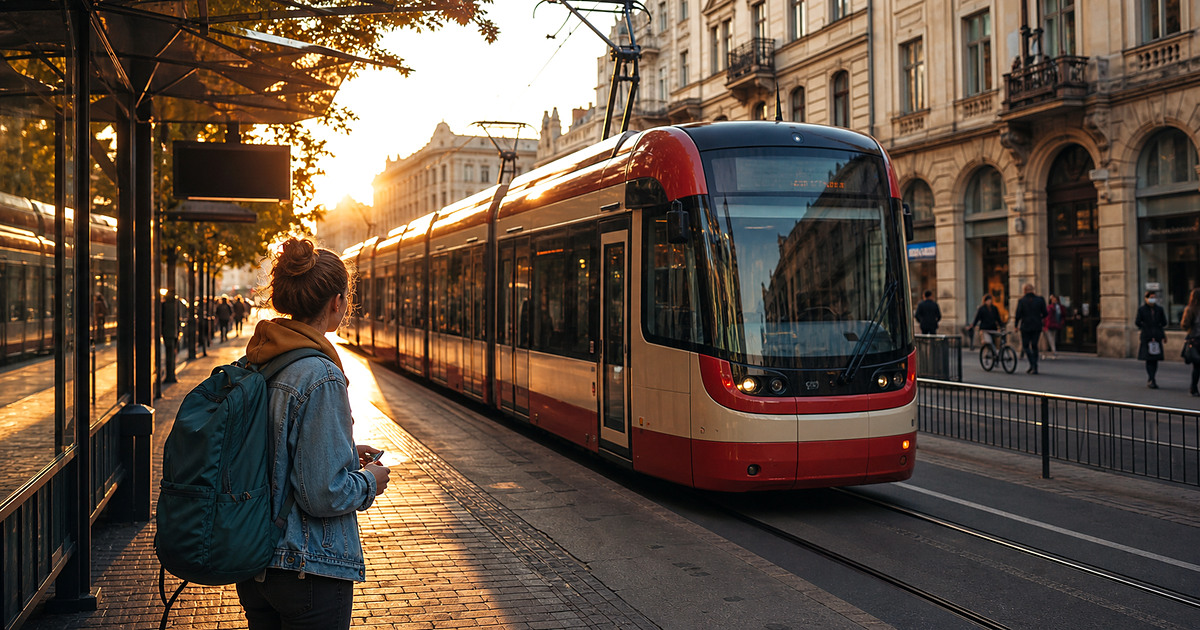
Each form of transport in Poland has its own personality. Trams are steady and predictable. They run on fixed tracks, often avoiding traffic, and are common in cities like Kraków, Wrocław, Poznań, and Gdańsk. During rush hour, they fill quickly, but outside peak times they offer a calm, almost meditative ride through the city. Buses are more flexible. They reach places trams don’t — residential areas, outskirts, quieter neighborhoods. They can be fast or painfully slow, depending on traffic. Many stops require you to signal the driver by raising your hand, something that feels strange at first but soon becomes automatic. The metro, available only in Warsaw, is the fastest and most straightforward option. With clear signage and announcements in Polish and English, it’s often a relief for newcomers.
You know exactly where you are and where you’re going, and the ride itself feels detached from street-level chaos. Learning which option to choose becomes instinctive. When you’re late, you take the metro. When you’re tired, you choose the tram. When you want to watch the city pass by, you sit by a bus window and let the movement calm your thoughts.
3. Night Transport and Long-Distance Travel — When the City Keeps Going
Polish cities don’t completely sleep. They just slow down. Night services vary by city and day, so check the local operator’s current timetable rather than assuming a standard frequency. Waiting for them in the cold can feel endless, but once inside, there’s a strange sense of solidarity. Everyone on board has a reason to be awake. For travel between cities, trains become essential. Poland’s railway system is extensive, connecting large cities and small towns alike. Intercity and regional operators serve different routes and ticket conditions; compare the current journey options before buying. Train stations are their own world — echoes of announcements, people standing still with luggage, others pacing impatiently. When you finally sit down and the train starts moving, there’s a quiet relief. Long-distance transport in Poland isn’t rushed. It gives you time to think, stare out the window, and let distance do its work.
4. Etiquette, Silence, and Learning to Belong
Public transportation in Poland runs on unspoken rules. People value personal space. Conversations are quiet or nonexistent. Eye contact is brief. Music stays in headphones. This silence isn’t coldness — it’s respect. Everyone shares the same small space, and no one wants to intrude. There are expectations, too. You give up your seat to elderly passengers. You stand on the right side of escalators. You don’t block doors. You move efficiently, without drawing attention. At first, this can feel isolating. But over time, it becomes comforting. You’re allowed to be tired, quiet, and invisible if you want. No one demands energy from you. Once you understand these social rhythms, you stop feeling like an outsider. You’re just another person holding onto a pole, watching stations pass, thinking about your day. In that moment, you belong — not because you spoke, but because you knew how to move.
Conclusion
Public transportation in Poland is more than infrastructure. It’s a lesson in patience, awareness, and quiet adaptation. The system is structured, reliable, and deeply woven into everyday life, asking little more than attention and respect in return. At first, it feels confusing and distant. But slowly, stop by stop, it becomes familiar. You learn the routes, the silence, the timing. And one day, without realizing it, you’re no longer navigating the city. You’re simply part of its movement — carried forward, calmly, with everyone else.
