


This article was created by a student taking part in the English Wizards internship programme. The author’s perspective is preserved; English Wizards provides editorial review, fact-risk corrections and presentation.
Moving to a new country is always an adventure, and learning the local language is a crucial part of that wonderful (though sometimes still scary) experience. For English-speaking expats in Poland, the challenge of learning Polish can be both daunting and exciting. Polish is a language rich in history, culture, and complexity. It is also a language significantly different from English, both in terms of grammar and pronunciation. However, with the right approach and resources, mastering Polish is achievable and rewarding. This guide will provide you with practical tips, resources, and insights to help you navigate your Polish language learning journey and make it exceedingly more light and fun! But before we even begin the process of learning, we must come to terms with the fact that Polish is a beautiful, but complex language, completely different from English.
The Challenges of Learning Polish
Naturally, Grammar. Polish grammar is known for its complexity, filled with key features that differ significantly from English – features such as cases, gender and verbs, which are really interesting, but also truly challenging elements when learning this beautiful language. First of all, the Polish language uses a case system, which essentially means that all nouns, pronouns, and adjectives can change their form depending on their role in a sentence. This can be enormously surprising and challenging for English speakers, as the English language doesn’t have such a system. Second of all, all Polish nouns are categorized into one of three genders: masculine, feminine, and neuter. Each of them has different declension patterns, which affect the endings of words, such as adjectives and verbs. Last but not least, in Polish, verbs are conjugated based on tense, aspect, and mood. Aspect is particulary surprising and challenging: it indicates whether an action is completed, still ongoing, or maybe habitual. Also, Pronunciation. Polish pronunciation is vastly different from English—and actually, this is where most Polish speakers struggle when learning the English language! Polish is filled with consonant clusters you would never find in English, making them incredibly tricky to pronounce. Many are found at the very beginning of words, adding to the challenge. Additionally, Polish has several sounds that do not exist in English—such as certain nasal vowels and the “ł” sound. And to make it all even more fun, some of the sounds that thereotically are the same in both Polish and English, are actually different when it comes to the movement of lips and/or tongue when speaking the sound! And vocabulary. Since Polish is Slavic in origin, there are very few cognates compared to other European languages such as French, Spanish, or German, where some words may sound, look, and mean very similar things. This makes building a vocabulary base slightly more challenging, as we have very little word similarity to rely on.
Practical Ways to Learn Polish
Immerse Yourself in the Language
. Meaning: you should surround yourself with Polish as much as possible. The more you listen to word endings, pronunciation, and the common phrases Poles use in everyday conversations, the better you will speak the language. This immersion helps in internalizing the language’s rhythm and structure. Consider setting your phone or computer interface to Polish, or even jotting down daily reminders in Polish to enhance exposure.
Listen to Polish Music and Podcasts
. Listening to such content, even if you don’t necessarily understand everything, can help you get used to the rhythm and sounds of the language and how it’s
pronounced. Platforms like Spotify and YouTube have a plethora of Polish music and podcasts covering various topics—from news and storytelling to comedy and educational content. Try to listen actively, picking out familiar words and phrases, and over time, you’ll notice your comprehension improving.
Watch Polish Movies and TV Shows
. Playing such films with English subtitles will help you not only with listening skills and your Polish pronunciation, but also with vocabulary typical for the Polish language – it will help you recognize and learn all the fun idioms and colloquialisms. Streaming platforms offer a wide selection of Polish movies and series that can be both entertaining and educational. Additionally, watching children’s shows can be beneficial as they often use simpler language.
Engage with Polish Speakers
. Engage in conversations with native Poles whenever possible. This could be through language exchange meetups, social gatherings, or simply chatting with colleagues and friends. It may seem scary or awkward at first, but generally, Polish people are very happy when they find out somebody’s learning their language, and they’re usually happy to chat at least for a little while and help you out.
Practise Regularly
. As with everything else, consistency is key. Make language practice a part of your daily routine. Finding a separate, specific time each day for studying Polish—even for a really short while—will help establish a routine. Whether it’s 15 minutes in the morning reviewing flashcards or listening to a podcast during your commute, regular exposure reinforces learning.
Maintain a Language Journal
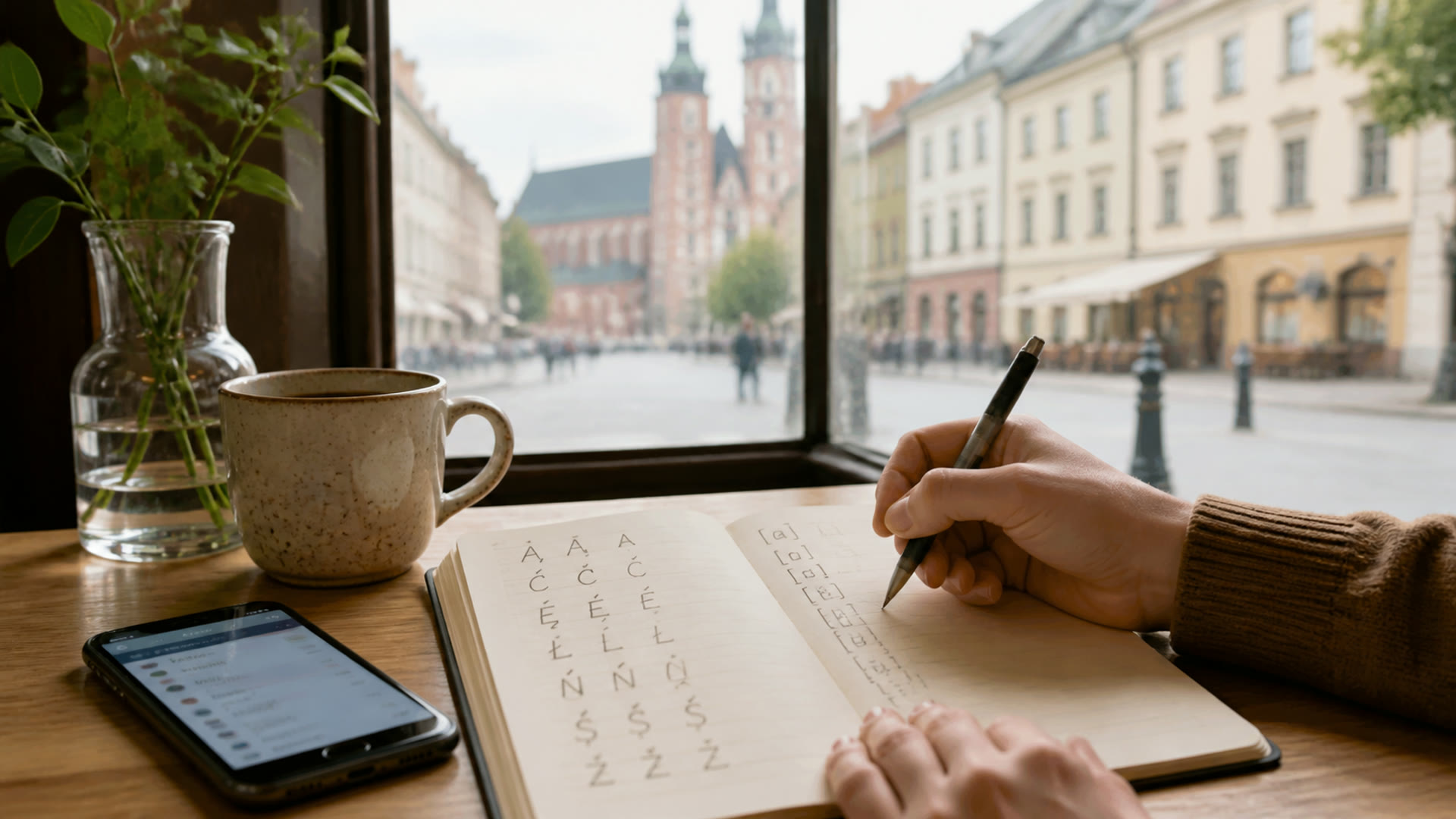
. Keeping a journal in which you—at least briefly—write about your day in Polish will be great! It can help with vocabulary and improve writing skills as well. Start with simple sentences and gradually incorporate new words and grammatical structures as you learn them. Over time, you’ll be able to look back and see your progress.
Focus on Practical Phrases
. While learning proper grammar and pronunciation is important, having practical knowledge is essential for everyday communication. Don’t worry about sounding unlike native Polish speakers or using the wrong case in a word! If you learn the most practical words and phrases, such as small talk, greetings, ordering food, and asking for help, you will do just fine. Prioritize language that you’ll use in real-life situations.
Use Flashcards
. These little things have proven to be great when trying to memorize common words and phrases—for example, what to call different things you have in your flat! Labeling them can help with your vocabulary. There are also many apps that allow you to create digital flashcards, complete with images and audio, making memorization more effective. Don’t Underestimate the Culture. Language and culture are deeply intertwined. Therefore, understanding Polish culture will make your language learning experience much more fun, interesting, and easier. Traditions. Same goes here! Familiarizing yourself with typical Polish traditions, holidays and custosm will provide you with a context needing for many phrases or habits Poles have. For instance, knowing about “Wigilia” (Christmas Eve dinner) or “Śmigus-Dyngus” (Wet Monday) can make certain conversations more relatable. Polish Literature. Reading it, even in translation, can not only help with very advanced vocabulary, but will also provide insights into cultural and historical contexts of the language, and some typical phrases and habits. Authors like Adam Mickiewicz or Wisława Szymborska offer a window into Poland’s soul. Cultural Events. Occurrences such as festivals, concerts, museums, art exhibitions, and so on, will help you get absorbed into local culture and practice your language skills with native speakers. Events like the Warsaw Film Festival or Kraków’s Wianki Festival are both entertaining and culturally enriching.
Of course, it’s also essential to consider various practical aspects that can significantly enhance your language acquisition. Language classes or private tutoring. . Enrolling in a language course, either in-person or online, provides structure and discipline to your learning journey. Courses often follow a curriculum designed to gradually build your skills, covering essential areas like grammar, vocabulary, and conversation. If you prefer one-on-one attention, however, hiring a private tutor can be particulary beneficial. A tutor will give their entire attention to you, tailor lessons to your specific needs, help you overcome particular challenges, and provide immediate feedback, making your learning more efficient. Tutors can and will also introduce real-life scenarios and conversational practice, which are crucial for gaining fluency, but won’t give you the stress of the true, real conversation if you’re not ready for it just yet. Online courses. They are a great alternative if you’re looking for flexibility. They allow you to learn at your own pace, making them ideal for busy individuals. Many online platforms offer interactive lessons, quizzes, and exercises that adapt to your learning level. Some courses are designed with gamification elements, making learning more engaging. Those sites often include a mix of reading, writing, listening, and speaking exercises. Plus, you can access them from anywhere, making it easier to incorporate learning into your daily routine. If socializing is not for you, you might consider language books and dictionaries with recordings. Traditional language books and dictionaries remain indispensable resources for any language learner. Look for books that are geared towards beginners to intermediate learners, as they often include structured lessons, exercises, and cultural notes. Dictionaries with phonetic transcriptions and accompanying recordings are particularly useful, because they help you learn the correct pronunciation of words, which is crucial in Polish, given its unique sounds and pronunciation rules. Audio dictionaries or phrasebooks can also serve as a handy reference for practicing on the go. And if you don’t have much free time during a day, video lessons are an excellent way to immerse yourself in the language. Many educational videos cover specific topics like vocabulary, grammar rules, pronunciation, and even cultural aspects of Poland. Channels on platforms like YouTube or educational sites often feature native speakers, which helps you get accustomed to the natural flow of the language. Watching – or even listening to! – videos on Polish culture, including traditions, history, and everyday life, can provide context to the language and make your learning more holistic. This cultural understanding can also make conversations with native speakers easier and more engaging.
Last but definitely not least, here are some final thoughts to keep in mind. Remember to stay motivated. There will surely come times when you feel like learning Polish is difficult, exhausting, maybe even pointless. Do not give in to such thoughts! Stay motivated by reminding yourself of not only the necessities, but also the benefits of learning Polish! You may make a list, if you like, of all the good things about Polish language and culture, and reread whenever you feel your motivation slipping away. Celebrate small victories, like understanding a conversation or reading a sign without assistance. Make sure your goals are realistic. It’s a really good idea to break your language journey into specific steps; make your goals into small, manageaable tasks, like a certain number of words for each week or one grammar goal for a month. This approach prevents overwhelm and allows for measurable progress. For instance, aim to master the cases over a two-month period or learn 50 new verbs in a month. Embrace Mistakes. As we mentioned before, Polish is a difficult language and you cannot expect to learn it all in one day. Even Poles sometimes have problems speaking Polish! Accept that you are
going to make a lot of mistakes, and remember not to get discouraged by this. Each time you make a mistake in pronunciation or grammar when speaking with natives, you learn something new. It’s a great opportunity to learn! Moreover, most people appreciate the effort and will gladly help correct you gently. Joining a community might be a really nice, kind idea. There’s a lot of people in your city probably learning Polish with you, so even reading about their posts or comments on various social media platforms or on online forums can be very uplifting. You can see what other expats are struggling with, offer some advice, or even get advice from them! Language learning groups on Facebook can be excellent resources. Lastly, remember to enjoy a journey. Sure, learning Polish is a long journey that acquires a big number of patience, motivation, perseverance. But remember to also have fun! Polish is a beautiful, rich language full of interesting idioms, jokes, and quirky words. Keep in mind to set realistic goals and just enjoy this journey! Celebrate your milestones and don’t be too hard on yourself.
Learning Polish as an expat in Poland is both a fulfilling and enriching experience. While it may be challenging, the rewards of mastering the language far outweigh the difficulties. By immersing yourself in the language, practicing regularly, and embracing the culture, you will not only improve your language skills but also deepen your connection to Poland and its people. Remember, language learning is a journey, not a destination, and every step you take brings you closer to fluency. Good luck, or as they say in Polish, powodzenia!
