


This article was created by a student taking part in the English Wizards internship programme. The author’s perspective is preserved; English Wizards provides editorial review, fact-risk corrections and presentation.
Introduction
Imagine walking into a busy café in Warsaw or Kraków, smiling at the person next to you and receiving a calm, neutral expression in return. For a newcomer, that moment can feel like rejection. It may simply reflect a different social rhythm.
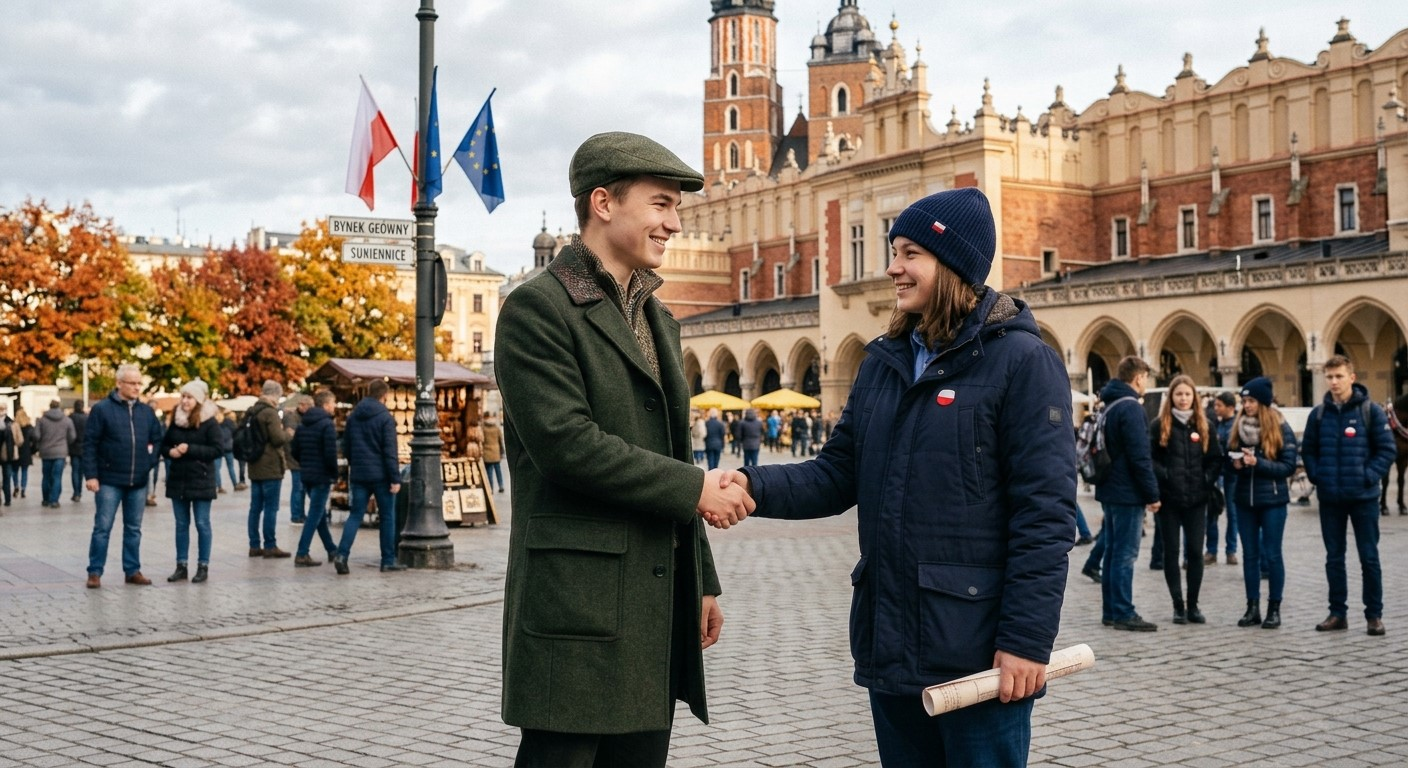
In my experience, friendships in Poland often grow through repeated contact, shared effort and honest conversation rather than instant familiarity. This is not a rule for every Polish person. It is a student perspective on some cultural signals that can make first meetings easier to read.
Decoding Personal Boundaries
Warmth is expressed differently across cultures. Some people use energetic greetings and quick small talk with strangers; others prefer a little more space at first. A neutral expression does not automatically mean that somebody is cold or uninterested.

Try replacing the pressure to impress with calm, everyday courtesy. A simple “Dzień dobry” when you enter a neighbourhood bakery and “Do widzenia” when you leave create a comfortable baseline. Let conversation develop over several encounters and pay attention to the other person’s pace.
Moving Past Small Talk
Shared activities can make conversation easier because nobody has to manufacture a connection from nothing. Sports clubs, board-game evenings, hiking groups, language exchanges, book fairs and themed meetups give people something real to do and discuss together.

You may also hear the word “narzekanie”, meaning complaining. Light complaints about familiar frustrations—delayed transport, bad weather or a difficult week—can become a form of dry humour and social bonding. Join in only when it feels natural; authenticity matters more than performing a stereotype.
The Power of Polish Hospitality and Loyalty
An invitation to somebody’s home can be a meaningful step in a friendship. The proverb “Gość w dom, Bóg w dom”—often translated as “A guest in the home is God in the home”—reflects a long cultural association between welcoming guests and generosity.

A modest gift can be a thoughtful way to thank your host. Chocolates, something from your home country or flowers can work well. One traditional etiquette tip is to bring an odd number of flowers, although customs vary between people and occasions.
Hospitality may arrive as tea, food and repeated offers of more. Accept what you genuinely want, show appreciation and do not assume every household follows the same traditions. Trust is built through attention and reciprocity, not by following a perfect script.
Friendships that take time to form can become especially dependable. The most useful lesson is not that every Polish friendship works in one fixed way, but that patience, shared experiences and directness can be more valuable than instant chemistry.
Conclusion
Building a social circle in a new country can feel intimidating. Start with ordinary courtesies, return to places where you meet the same people, choose activities you genuinely enjoy and allow trust to grow at its own pace.
The first quiet hello may not tell you much. Give the relationship enough room to become a second conversation, a shared plan and eventually a friendship.
