Christian singles in Poland can meet like-minded people faster by building two repeatable “anchors” in their week: one faith rhythm (a church service plus something midweek) and one local rhythm (a hobby, language exchange, sport, or volunteer team). If you’re relocating, this matters because stability is not only paperwork. It’s also having people you can call, pray with, and do normal life with. Start small, stay consistent for 30 days, and widen your circle carefully. If your city is small or your schedule is tight, a values-first tool can help you meet other Christians beyond your immediate neighborhood.
1 in 6 people worldwide are affected by loneliness, according to a WHO report (2025).
Statistics Poland reported 1,106,300 foreigners performing work in Poland at the end of July 2025, which means many newcomers are rebuilding their social lives here.
SALT says it has helped millions of single Christians meet across 50 countries and in 20 languages, and it is trusted by 1m+ Christians.
The fastest path is not more events. It’s the same two events, every week, for a month.
Why meeting people matters for long-term stability in Poland
Relocation has two tracks. Track one is legal and logistical: residence status, housing, banking, work, and the endless admin that comes with living in a country that isn’t your native system. Track two is personal stability: friendships, routines, and the kind of support network that keeps you grounded when the first track gets messy.
If you’re a Christian, community is not a side quest. It affects your mental health, your habits, your decision-making, and even how well you cope with bureaucracy and culture shock. The World Health Organization has reported that loneliness affects 1 in 6 people worldwide, and links social connection to better health and reduced risk of early death. That’s not a “nice bonus”. It’s a stability factor.
Relocation note: English Wizards is built around helping foreigners create a legal, stable life in Europe through Poland’s residency pathways. If you’re still planning your move or trying to get clarity on your pathway, start here: English Wizards programs.
Where do Christian singles meet in Poland?
Most “Christian dating in Poland” content online is either a dating-site landing page or a generic list of apps. That’s not what you need when you’re actually trying to build a life here. In Poland, connection usually grows through repeatable presence. You don’t have to be charismatic. You have to be consistent.
1) Church entry points that work even if your Polish is limited
English-language Catholic parishes: often the fastest on-ramp for expats in major cities.
International fellowships: usually multi-denominational and used to welcoming newcomers.
Bilingual services: a good bridge if you’re learning Polish and want to integrate long-term.
Search terms that work: “English Mass” + your city, “international church” + your city, “bilingual service” + your city, “young adults Bible study” + your city.
2) The real multiplier: midweek groups and service teams
Sunday-only attendance rarely builds close friendships. What works is a smaller setting where you talk before and after, and you have a shared task. Look for:
small groups and Bible studies
choirs or worship teams
volunteer teams (food support, kids ministry, practical help)
retreats, conferences, and visiting speakers
3) “Third places” that aren’t church, but still align with your values
If your week is work-heavy or you’re in a smaller city, add one non-church rhythm that puts you around the same people repeatedly:
language exchanges with a clear boundary (you’re building friendships, not collecting contacts)
running clubs, climbing gyms, hiking groups
board game cafés, choir groups, cooking classes
volunteering with an established organization (not random one-off events)
Poland-specific tip: In many Polish settings, relationships grow slower at first. Don’t interpret that as rejection. If you keep showing up, people tend to open up over time.
A realistic 30-day plan to build your circle
This is designed for real life. You can do it with a full-time job, studies, or a chaotic relocation schedule.
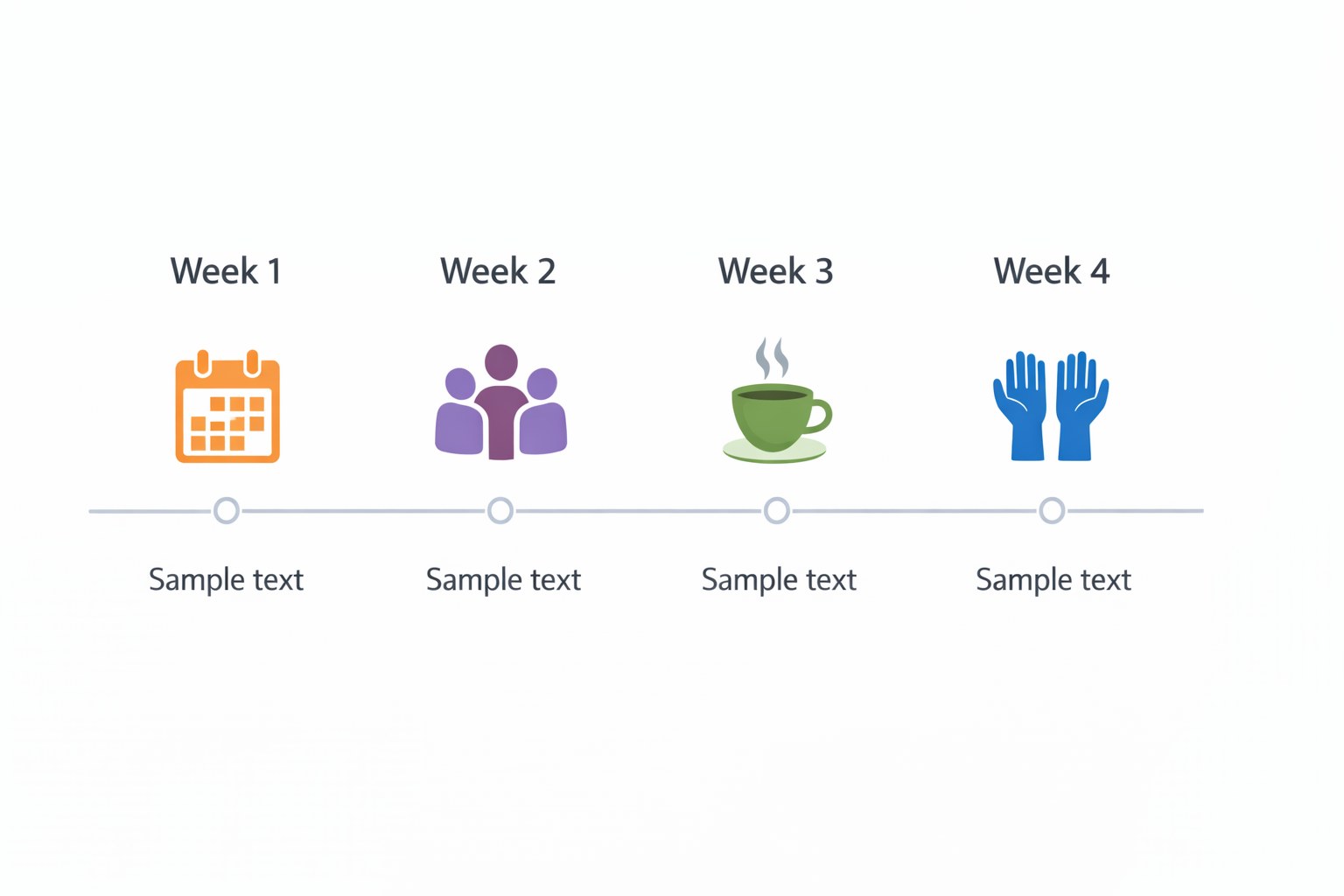
Week 1: Choose two anchors
Anchor A (faith rhythm): attend one church service you can follow.
Anchor B (local rhythm): choose one weekly “third place” and commit to it.
Your only job this week is to show up and stay 10–15 minutes after.
Week 2: Add one midweek connection
Join a small group, Bible study, or volunteer team.
Introduce yourself to one person and ask one clear question: “Do you have any midweek groups?”
Week 3: Move from “meeting” to “known”
Show up again to the same group.
Invite one person for coffee right after (keep it simple, keep it public).
Ask for one practical recommendation (where to buy something, how to do something). People bond through small help.
Week 4: Build a repeatable rhythm
Plan a small hangout with 2–3 people (coffee or a simple meal).
Decide what you’ll keep for month two. Keep only what you can sustain.
Why this works: it creates repeat exposure. That’s the foundation of friendship, and it’s also how healthy dating opportunities usually appear without forcing it.
Dating with values in Poland and staying safe
Poland is culturally Christian in many ways, but how people date varies by city, age, and church background. Some people are traditional. Some are modern. Many are a mix. The best approach is steady and clear.
Three principles that prevent regret
Clarity early: be normal and honest about your faith and boundaries.
Character over chemistry: watch reliability, humility, and how they treat others.
Community context: if faith is central, meet people where faith is normal, not where it’s an exception.
Safety basics that apply offline and online
First meet-ups in public places only.
Tell a friend where you are and when you expect to be back.
Take your time. Pressure is a signal. Calm is a signal too.
Quick reminder: Nobody can guarantee safety. What you can control is pacing, location, and boundaries.
When using an app makes sense (and how to keep it healthy)
There are seasons where church and local routines still leave you with a tiny dating pool. This is common if:
you’re in a smaller city
you work remotely and don’t meet new people through work
your church is mostly families or much older demographics
you travel between countries and want continuity
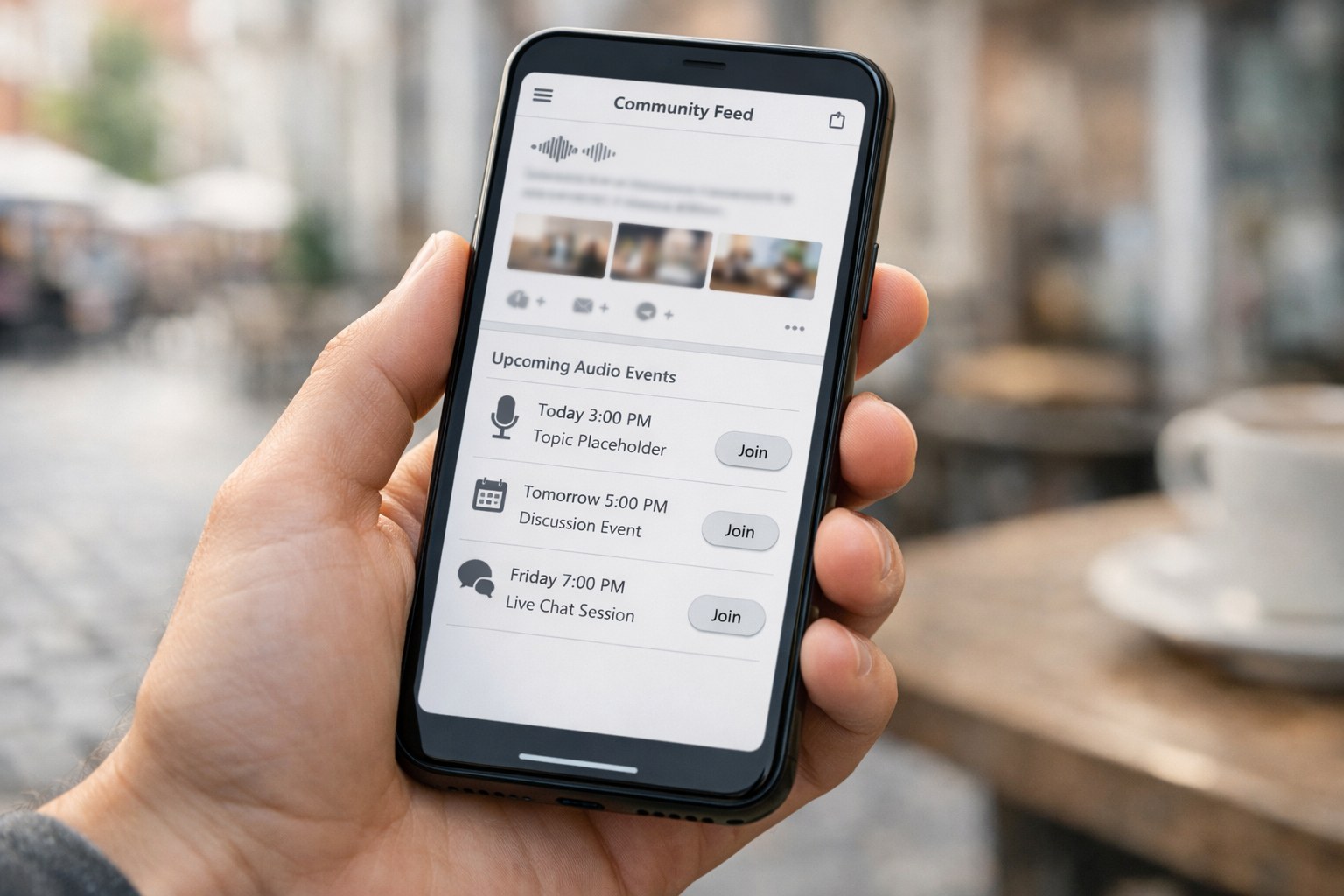
In those cases, a values-first option can help you meet Christians outside your immediate bubble. One example is SALT, which positions itself as a Christian dating app and community. SALT also describes community features beyond matching, including a social feed (Social), live interactive audio events (Table), and online and in-person events.
How to use it well: keep your real-life rhythms strong. Use online tools to widen your introductions, then move toward normal, public, unhurried in-person connection. If your app use becomes your only social input, it tends to increase anxiety and reduce real momentum.
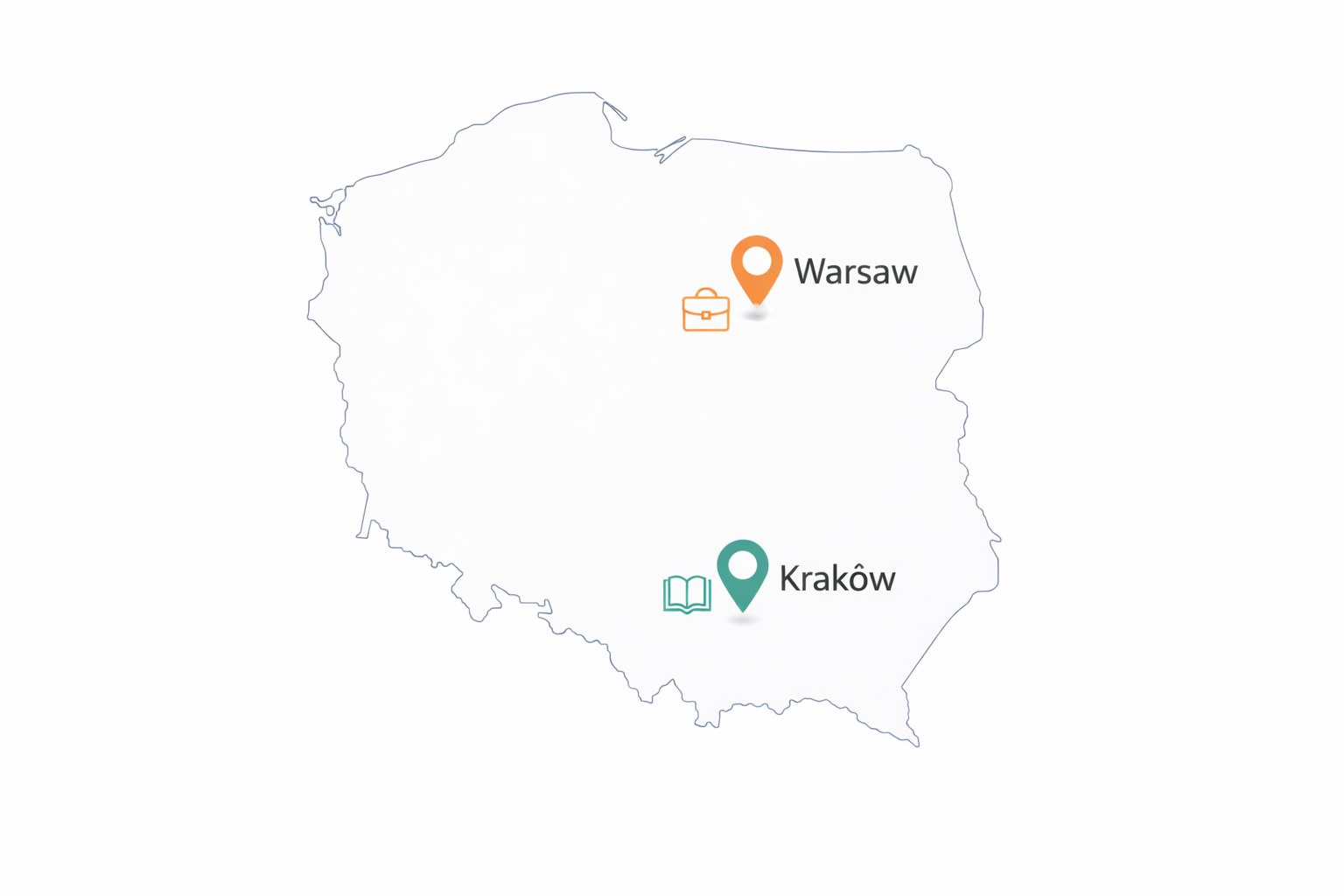
Two real scenarios: what this looks like in Warsaw vs Kraków
Scenario 1: Warsaw, remote work, and the “busy but lonely” trap
You move to Warsaw for work. On paper, you’re doing fine. Your rent is paid, your job is stable, and you can order coffee in Polish. Still, your week is basically work, errands, and screens. You try two random meetups, but nothing sticks. You start thinking: “Maybe it’s just hard here.”
The pivot is simple. You pick one English-language service you can follow and commit to staying after for 15 minutes. You ask about a midweek group and actually go. It’s awkward the first time, so you go again. By the third week, you recognize people. Someone invites you to a casual dinner. Now you’re in the loop.
For dating, you don’t “hunt” every weekend. You focus on being present where your faith and character are visible. If your pool is still small, you add one values-first channel to widen introductions, but you keep your in-person rhythm as the foundation. Over time, you stop feeling like a visitor and start feeling like you live here.
Scenario 2: Kraków, studies, and the language barrier
You land in Kraków for a program or a new role. Your Polish is limited. You go to a local church once and can’t follow much. You leave remember thinking: “I’m not sure where I fit.” You default to international friends, but everyone is transient, so friendships don’t deepen.
You adjust the plan. You find a bilingual or international fellowship where you can understand and talk after. You join a volunteer team because service reduces awkwardness. You add one weekly hobby, something that repeats, not something you do once. You start learning names and learning the city at the same time.
Dating becomes less stressful because you’re not trying to build everything through dating. You’re building a stable life first. If you meet someone, great. If you don’t yet, your life still has structure and support. That stability makes better dating decisions possible when the opportunity appears.
Scenario comparison table
The best approach depends on your city, schedule, and stage of relocation. Use this to choose what to emphasize this month.
Approach
Best for
Main strength
Watch out for
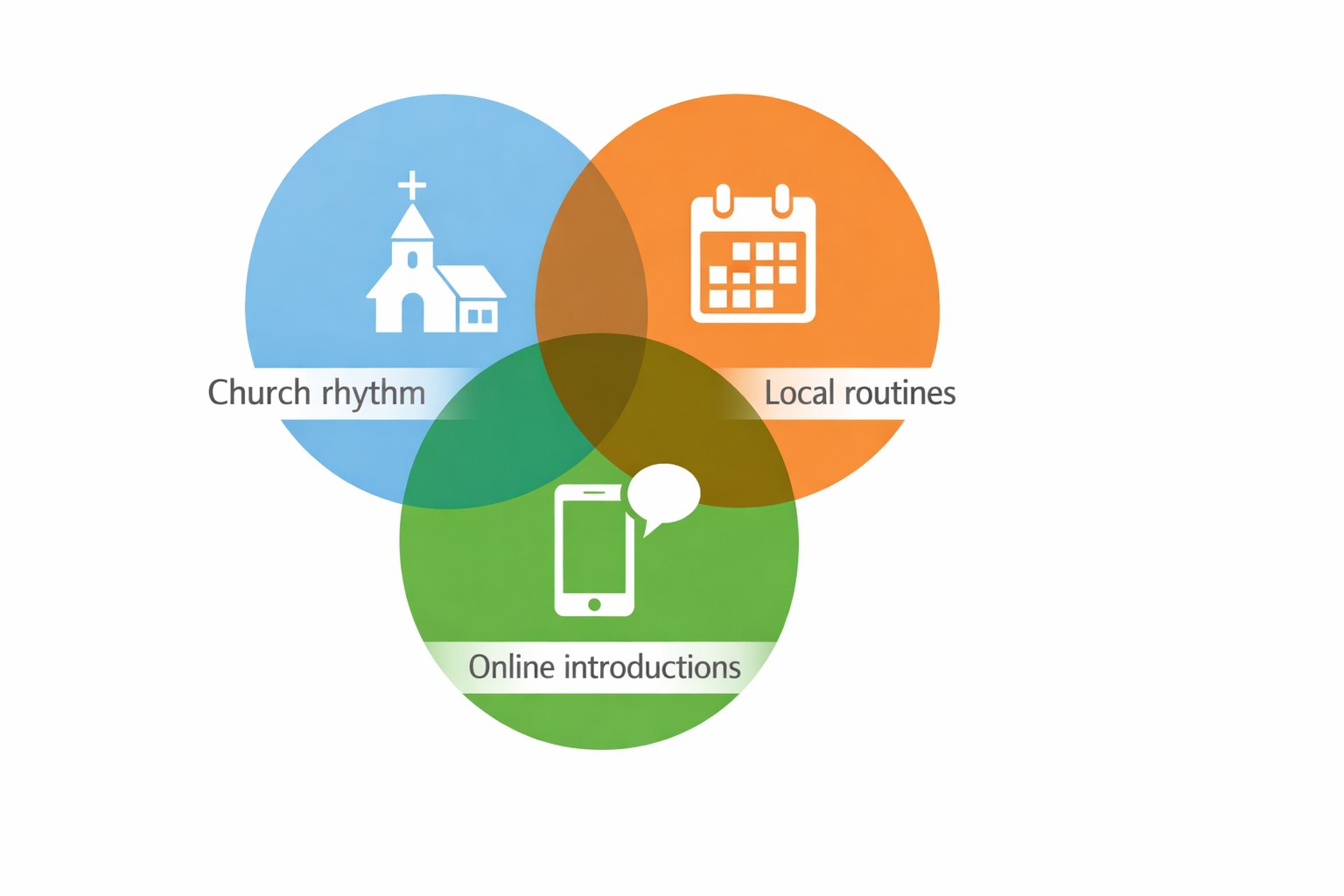
Church rhythm first
New arrivals, values-led dating
Shared faith, deeper trust
Slow progress if you never add a second anchor
Service + volunteering first
People who want character-based connection
Purpose-driven friendships
Overcommitment and burnout
Online introductions first
Small cities, time constraints, frequent travel
Wider pool, faster intros
Shallow momentum if you don’t meet in real life
Hybrid (recommended)
Most people
Balanced and sustainable
Trying to do too much at once
FAQ: Christian singles in Poland
Where can I meet other Christian singles in Poland if I don’t speak Polish well?
Start by removing the language barrier from your first few connection points. Your early goal is not “perfect integration.” It’s building repeatable contact with people you can actually talk to. In bigger cities, look for English-language Catholic parishes, international fellowships, and bilingual services. Even if you plan to learn Polish quickly, you’ll build momentum faster if your first relationships aren’t limited to awkward small talk.
Then add a midweek setting. Sunday is a great starting point, but midweek groups are where you become known. A small group, Bible study, or volunteer team gives you built-in conversation and a reason to show up. It also lowers the pressure. You’re not trying to impress someone. You’re doing something together.
Outside church, choose one weekly “third place” that repeats. Language exchanges can work if you treat them as a place to build one or two steady friendships, not endless surface-level conversations. Sports clubs, choir groups, hobby nights, and volunteering are usually more stable. The best marker is repeat attendance. If you only go once, you won’t break into existing circles.
Finally, don’t confuse “slow” with “closed.” In many Polish settings, warmth shows up after consistency, not before it. If you keep showing up for 30 days, you’ll usually see the difference.
Is online dating common in Poland, and how do I keep it values-first?
Online dating exists in Poland like it does elsewhere, especially in larger cities. The issue for many Christians is not access. It’s alignment. If your faith and boundaries matter, you need a process that protects your peace.
Values-first online dating starts with clarity. Don’t hide your faith commitments and then hope someone “catches up later.” State them calmly. Keep your profile and messages respectful, and prioritize conversations that show character: consistency, honesty, and kindness. If someone moves fast, pressures you, or tries to push your boundaries early, take that seriously. A healthy person won’t punish you for going at a steady pace.
Next, keep your in-person life strong. If your only social input is an app, your decisions start to run on dopamine and anxiety. It’s better to have a weekly church rhythm and one local routine, then use online tools as an introduction layer. That keeps you grounded, and it reduces the temptation to treat dating like a numbers game.
Finally, apply basic safety every time: public first meetings, tell a friend, take your time. If you do those things, online introductions can be a helpful bridge. They should never be your entire social strategy.
How do I find English-speaking churches or international fellowships in Poland?
Use targeted search terms instead of generic browsing. Try: “English Mass” + your city, “international church” + your city, “bilingual service” + your city. Many churches and fellowships post the basics online, even if their full community life is organized through in-person announcements or private groups.
When you attend for the first time, don’t aim for perfection. Aim for one next step. Stay after for 10–15 minutes and ask one clear question: “Do you have any midweek groups or volunteer teams?” That single question often determines whether you build friendships or stay anonymous.
If your goal is long-term integration in Poland, bilingual settings can be especially useful. You can follow enough to participate, and you’ll also be around people who are used to cross-cultural communication. Over time, that can help you build confidence to participate in Polish-language settings too.
One more practical tip: choose one place and return. Many newcomers keep shopping for a “perfect fit” and end up with no roots. In most communities, belonging is built through repeated presence, not instant chemistry.
I’m relocating often. How do I date without making my life unstable?
If your location changes frequently, your strategy has to change too. The goal is not to force a relationship timeline. It’s to keep your life stable while staying open to connection.
Start by building non-negotiables that travel with you: a faith rhythm (service, prayer, Scripture, a trusted mentor) and a personal stability rhythm (sleep, training, work routines). Without those, dating tends to become emotional noise.
Then decide what “serious” looks like for your season. That might mean: you only date people who are open to distance for a time, or you only date when your next 6–12 months are predictable. That’s not rigid. It’s honest.
When you meet someone, move slower and be more explicit. “I’m in Poland now, but my timeline is uncertain. I’m open to getting to know you, and I want to do it with respect.” The right person won’t need manipulation. They’ll need clarity.
If you’re still in the relocation-planning stage and want clarity on your legal pathway through Poland, use the structured options on English Wizards programs. A stable plan makes better relationships possible.
Conclusion: a stable life is built on paperwork and people
For Christian singles in Poland, the fastest path to real connection is not chasing more events. It’s building two weekly anchors and keeping them for 30 days. One anchor should be faith-based, ideally a church service plus a midweek group or service team. The second anchor should be local and repeatable, something that puts you around the same people consistently.
Dating tends to go better when your life is already steady. You make calmer decisions. You notice character. You don’t cling to the first person who gives attention. If your city or schedule makes it hard to meet other Christians, a values-first tool can widen introductions, but it works best when it supports your real-world rhythm instead of replacing it.
If you’re still building the legal side of your life in Poland, start with clarity. Your pathway depends on your passport and goals. The quickest way to reduce stress is to follow a structured plan rather than guessing. You can see the available options here: English Wizards programs.
Last updated: January 2026.
Sources & references (for verification)
World Health Organization (30 June 2025): “Social connection linked to improved health and reduced risk of early death” (loneliness affects 1 in 6 people). Source
Polish Press Agency (PAP), citing Statistics Poland (13 Jan 2026): “Poland with over 1.1 mln foreigners performing work at end of July 2025” (1,106,300 foreigners). Source
SALT homepage: global reach and trust signals (50 countries, 20 languages, 1m+ Christians, “trusted by millions”). Source
SALT Community page: Social feed, Table live audio events, online and in-person events. Source
Seven English-first calculators to help foreigners in Poland avoid expensive mistakes with work contracts, B2B taxes, company setup, rental ROI, car leasing, and PKD/VAT choices. Updated for 2026…
Tax clearance certificate Poland – learn the legal basis, ZAP-3 registration, how to find your tax office, and 4 ways to get a personal no-arrears certificate.
by English Wizards |
December 5, 2025 |
Living in Poland
Youth leadership mission trips Poland equip teens with discipleship, bilingual ministry, and leadership skills while serving alongside Polish youth.
by English Wizards |
August 23, 2025 |
Faith & Missions
Your privacy choices
We use cookies (not the tasty ones) to keep English Wizards running smoothly and to understand how people move through the site. You choose what extra magic we can use.
Essential
Always active
These cookies are required for the website to work correctly and cannot be disabled.
Preferences
These cookies remember your settings so the site feels consistent every time you visit. They don’t track you — they only store things like language, region, or layout choices.
Analytics
These cookies help us understand how visitors use the site so we can improve it. No personal data is used unless you allow it.The technical storage or access that is used exclusively for anonymous statistical purposes. Without a subpoena, voluntary compliance on the part of your Internet Service Provider, or additional records from a third party, information stored or retrieved for this purpose alone cannot usually be used to identify you.
Personalization
These cookies allow us to use Google Signals and similar tools to personalize content and understand our audience better.